Nearly 10,000 Forgotten Punjabi WWI Soldiers Officially Recognised After More Than a Century
The Commonwealth War Graves Commission has officially recognised 9,909 previously unrecorded Punjabi World War I soldiers, marking its largest casualty database update in more than 80 years.
By Punjab in a Minute
Nearly 10,000 Forgotten Punjabi WWI Soldiers Officially Recognised After More Than a Century
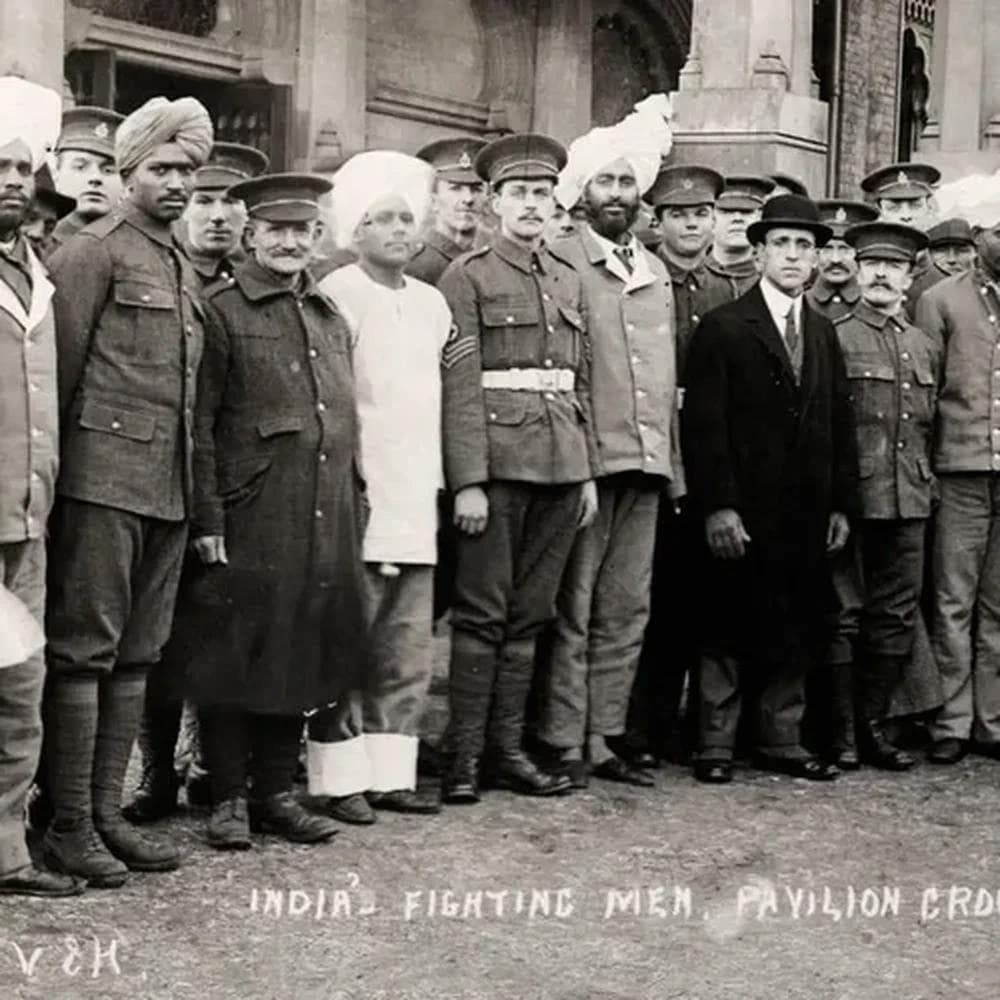
More than a century after the First World War, 9,909 soldiers from pre-Partition Punjab have finally been officially recognised by the Commonwealth War Graves Commission (CWGC), correcting one of the largest historical omissions in its records.
The update is the largest expansion of the CWGC's casualty database since the Second World War and follows years of research through the Punjab Registers Project, which uncovered thousands of previously unrecorded soldiers who served in the British Indian Army during World War I.
Correcting a Historic Omission
Although these men served during the war, many were never formally commemorated because of administrative decisions made under the British Indian government at the time.
As a result, thousands of families were left without official recognition of relatives who lost their lives during the conflict.
The latest update restores those names to the official casualty database, giving long-overdue recognition to soldiers whose service had remained largely forgotten.
Inside the Punjab Registers Project
The breakthrough came after researchers spent five years digitising fragile historical registers preserved at the Lahore Museum.
The registers contained records of approximately 320,000 Punjabi recruits who served during the war.
Researchers compared 15,935 recorded deaths with more than 74,000 existing CWGC Indian Army records, eventually identifying 9,909 previously unrecorded casualties.
The project brought together the Commonwealth War Graves Commission, the UK Punjab Heritage Association, and the University of Greenwich, combining historical research with computer-assisted analysis.
Why This Matters
For many families, the recognition represents more than an update to official records.
Descendants are now learning about relatives whose wartime service had never been formally acknowledged.
Some families have described the recognition as providing a sense of closure and a renewed connection to their family history.
CWGC Director General Claire Horton described the project as helping restore missing chapters of both family and world history, while recognising the personal sacrifices made during the war.
Punjab's Contribution to World War I
More than 1.4 million soldiers from the territories that now form India, Pakistan and Bangladesh served in the British Indian Army during the First World War, with Punjab contributing a significant number of recruits.
Among the newly recognised soldiers, approximately 40% were Muslim, 25% Sikh, and 25% Hindu, reflecting the diverse communities of pre-Partition Punjab.
Their service ranged from frontline combat to support roles across several theatres of war.
More than a century later, their names are finally receiving the recognition many historians believe they deserved.
Sources
- Commonwealth War Graves Commission (CWGC) / UK Punjab Heritage Association, University of Greenwich, GB News, The Week